

APS x Hope Family Wines Bottling Line
We want to give a huge thank you to Wine Business Monthly for writing about our bottling line at Hope Family Wines!
See below for the full article written by Haley Penn.
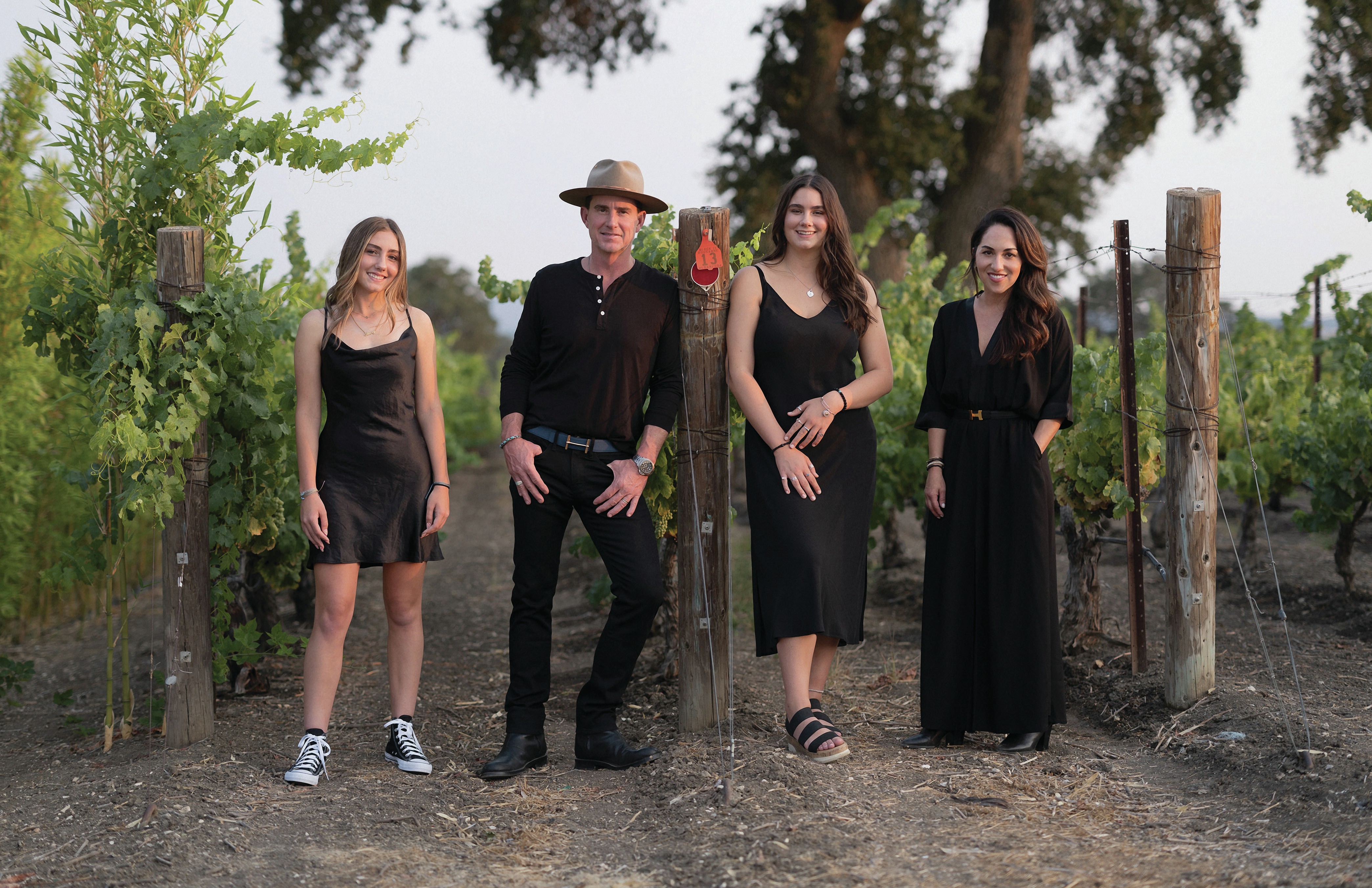
IN AN ERA WHEN MANY California wineries are facing operational and sales challenges, Hope Family Wines is doing what few can claim: growing-and growing-quickly. Over the past five years, the family-owned operation in Paso Robles, Calif. has more than doubled its case sales, opened a second tasting room and built a 140,000-square-foot, vertically-integrated warehouse and bottling facility designed to serve as a distribution hub. Additionally, in August 2025 the company acquired a new estate vineyard, Tufera Farms, in the Creston District AVA of Paso Robles. The property, which has been a longtime source for the Austin Hope Cabernet Sauvignon, will also provide organic truffles.
Paso Robles, too, has been outperforming expectations. Established producers, like DAOU Vineyards, Justin Vineyards and Hope Family Wines, have experienced significant growth despite broader trends of inventory recalibration and declining consumption in many markets.
Family Roots, Brand Evolution
Austin Hope grew up farming alongside his parents, Chuck and Marlyn Hope, who moved to Paso Robles in 1978 and began growing apples and grapes. By the mid-1980s, they had transitioned to grape growing full-time, selling fruit to Napa producers, including Chuck Wagner of Caymus Vineyards. In the mid-1990s, the Hope family acquired the Liberty School label from the Wagners and began producing it in Paso Robles.
That same year, they launched the Treana brand, and would later introduce Candor, Troublemaker and the eponymous Austin Hope wines. Austin’s longtime creative partnership with director of winemaking, Jason “JC” Diefenderfer, began in 1996. JC’s background in engineering and design has been a driving force behind Hope’s operational infrastructure.
From Napa to Paso: Vertical Integration
For years, Hope Family Wines trucked all its finished wine north to a shared bottling facility operated by the Wagner family. To keep a close eye on operations, Diefenderfer even earned his pilot’s license in 2007-flying out of the Paso Robles airport right next to the winery to check on the wines. Fourteen years later, the Napa-based facility reached capacity, and the Hope team had just six months to find a new path forward.
The answer? Bring it all home to Paso.
What followed was a major leap: the creation of a state-of-the-art, fully integrated production site that allows Hope Family Wines to control every step of the process-from winemaking to bottling, storage and distribution- without leaving the property.
“We’ve always shipped out of Napa because it’s the central hub,” JC said. “But now one of our biggest pushes is to consolidate here in Paso. It’s not about competing; it’s about lifting up this region.”
The 140,000-square-foot facility now handles production, bottling, warehousing and global distribution under one roof. It’s also helping establish Paso Robles as a viable logistics center for other producers in the region.
Built to Scale
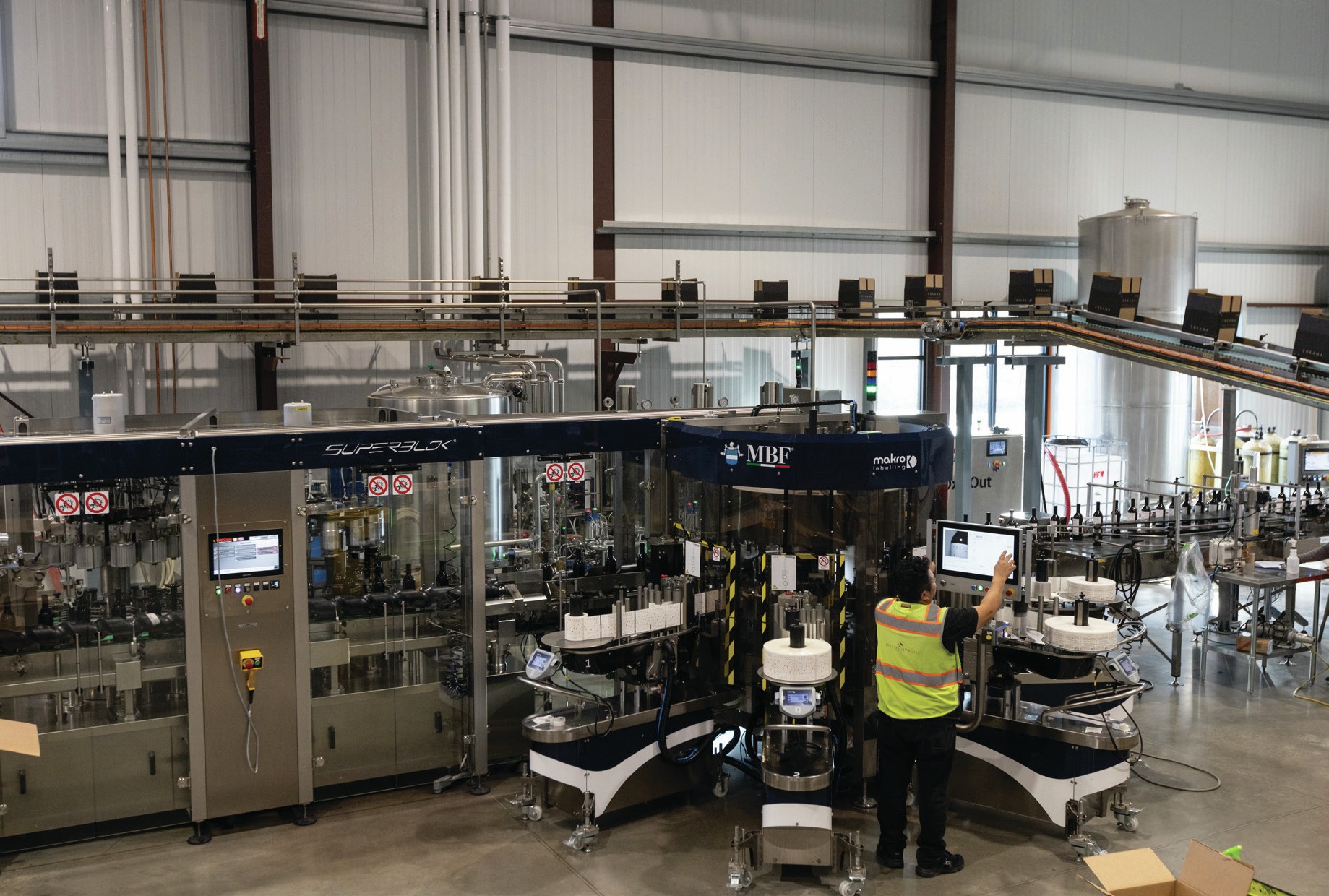
The one-million-case-capacity facility was made completely from steel with insulated walls and night air cooling and refrigeration for energy efficiency. The 54-foot ceilings can accommodate rack-and-crane systems for automated pallet storage when needed, and the floor was poured with a 14-inch-thick double mat to support that weight.
“All the air, water, power-it’s already in place underground,” explained Diefenderfer. “So, when we add new machines in the future, they’re ready to go. I’ve already designed the bolt patterns and utilities for equipment we don’t even have yet.”
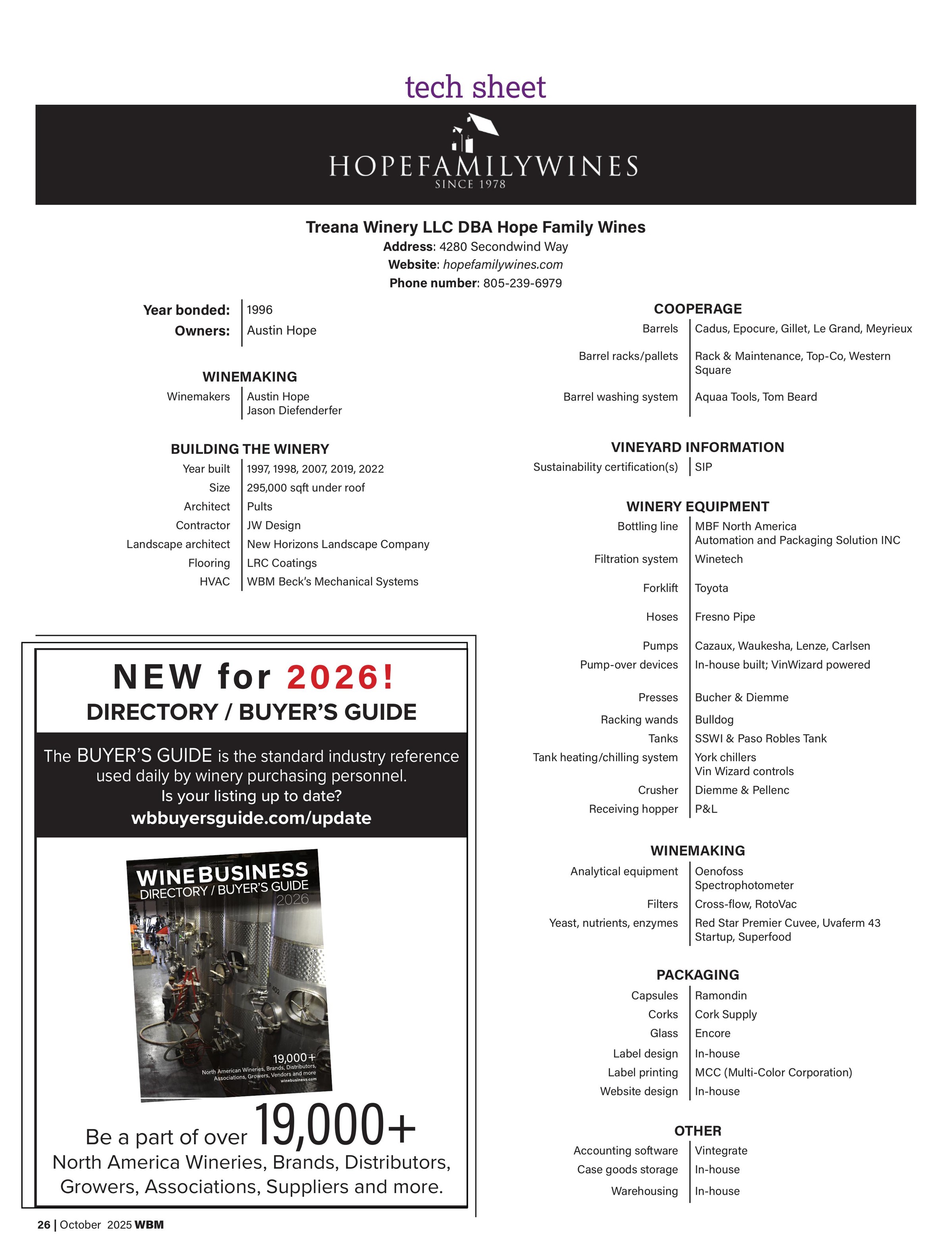
Everything was built to accommodate and work around the bottling line-a high-tech system designed by JC and assembled in partnership with six manufacturers, including Italy’s MBF SpA and APS Packaging. It processes up to 200 bottles per minute and integrates nearly 300,000 components.
The high-tech line’s multiple motor controls ensure smooth transitions as bottles move along the conveyor. “Most bottling lines are loud. You’ve got to wear earplugs,” Diefenderfer noted. “Ours runs under 80 decibels. You could carry on a conversation while it’s running.”
Beyond comfort, that quiet hum signals efficiency and precision. A central automated control panel monitors every variable in real time-tank levels, pump speeds, cork or screw cap positioning and bottles per minute. High-speed optical systems inspect each bottle for cork integrity, fill level, glass quality and label placement. “The biggest advances in bottling lines are in quality control systems,” Diefenderfer observed. “We went all in.”
If something’s off, the system knows. “If the fill is off or if the cork isn’t right, it kicks the bottle out before it’s labeled,” he said. “Everything gets checked.” And all of it is run by a team of just five people.
Perhaps most impressive is the line’s efficient water system. Traditional European bottling lines can use up to 10,000 gallons of water per day; Hope Family Wines’ setup runs on just 200. The closed-loop hot water sanitation system filters, heats, cools and recycles water several times a day, using 0.2-micron sterilizing membranes. It meets sanitation standards while dramatically reducing consumption, something Diefenderfer prioritized from the start.
He says other California wineries have attempted similar systems and abandoned them due to water usage concerns. This customization proves it’s possible. “It’s economically intelligent for us to save water and use less because we have to buy every gallon,” he remarked. “Plus, it’s good for the environment.”
Water & Energy Efficiency
“We’re building a full water reuse and treatment plant,” noted Diefenderfer. “It’s not just about being ‘green’-it’s economically intelligent. We’re on city water here. We have to pay for every gallon we use. So why not find a way to use less of it and reuse what we can?”
The system will be engineered to clean and recycle water used throughout the winemaking process, starting with filtration and moving into advanced oxidation treatment.
“Organic matter in water bonds to the water molecule. You can’t just filter it out,” Diefenderfer explained. “But if you oxidize it, you can break it down and separate it.” The solids can then be returned to the soil while the treated water can be reused for everything, from irrigation to equipment cleaning.
The numbers tell the story. “Most wineries use nine gallons of water to make one gallon of wine,” said Diefenderfer. “We’re down to four-and we want to go further.”
When completed, the new facility will allow for near-total water reuse on-site, cutting consumption and reducing the winery’s environmental footprint at scale.
“Look, I’m not doing this to say we’re saving the world,” he added. “I’m doing it because I want my kids to be able to live and work here. If we all keep pulling from the same source, eventually, it’s gone. So why not build smarter now?”
The system is in development with local company EnviroTech, whose founder Diefenderfer described as “super enthusiastic-like, this guy loves wastewater.” He laughed. “But honestly, it’s a billion-dollar space. Cities, ag, everyone’s going to need to figure this out.”
Direct-to-Consumer: A New Era of Hospitality
In the early years, the Hopes ran a modest tasting room and a small bed and breakfast, which they sold. But the estate experience, located on Live Oak Road in Paso Robles and originally built in 2008, has transformed over the years into something much more expansive. What began as a small, trade-focused room grew into multiple structures, including a middle barn that recently added a second-story deck for additional lounge seating.
Today, the estate tasting room welcomes approximately 50,000 visitors annually, a growth driven in large part by Jo Armstrong, who joined as director of hospitality and direct-to-consumer in 2018. At the time, Armstrong recalled, “Our dream was to be as known for hospitality as for Austin Hope Cabernet. Those are big shoes to fill.”
Central to that vision is the staff, affectionately known as “dreamweavers,” a title that signals the winery’s commitment to hospitality. Drawing inspiration from Will Guidara’s Unreasonable Hospitality, Armstrong introduced the idea of “radical guest-centricity” as a North Star. The team even joined Guidara’s beta book club when the book launched, turning its ideas into an internal “hospitality bible” that guides every staff training.
Since the pandemic, they’ve reopened to a mix of walk-ins and bookings, and the tasting room has been reimagined. Upon arrival, guests are warmly greeted and either guided to their reserved tasting or welcomed to an open-air patio bar for a more casual, no-reservation experience.
Modular planter walls on the patio can be moved or reconfigured to accommodate larger groups that are traveling together-a post-pandemic trend Armstrong and her team were quick to notice. “We didn’t want to divide parties,” she said. “That’s not what wine does-wine brings people together.”
The tasting room also hosts regular events that have proven popular, such as Thursday evening twilight tastings. For club members, monthly vineyard walks led by the director of vineyards, Stasi Seay, offer an educational look at regenerative farming practices, including bee boxes, honey production and soil health, alongside tastings of wines produced from those same vineyards. Armstrong laughed, “I’ve never been this interested in dirt and rocks, but Stasi makes it fascinating.”
Hope on Park: Meeting a New Generation
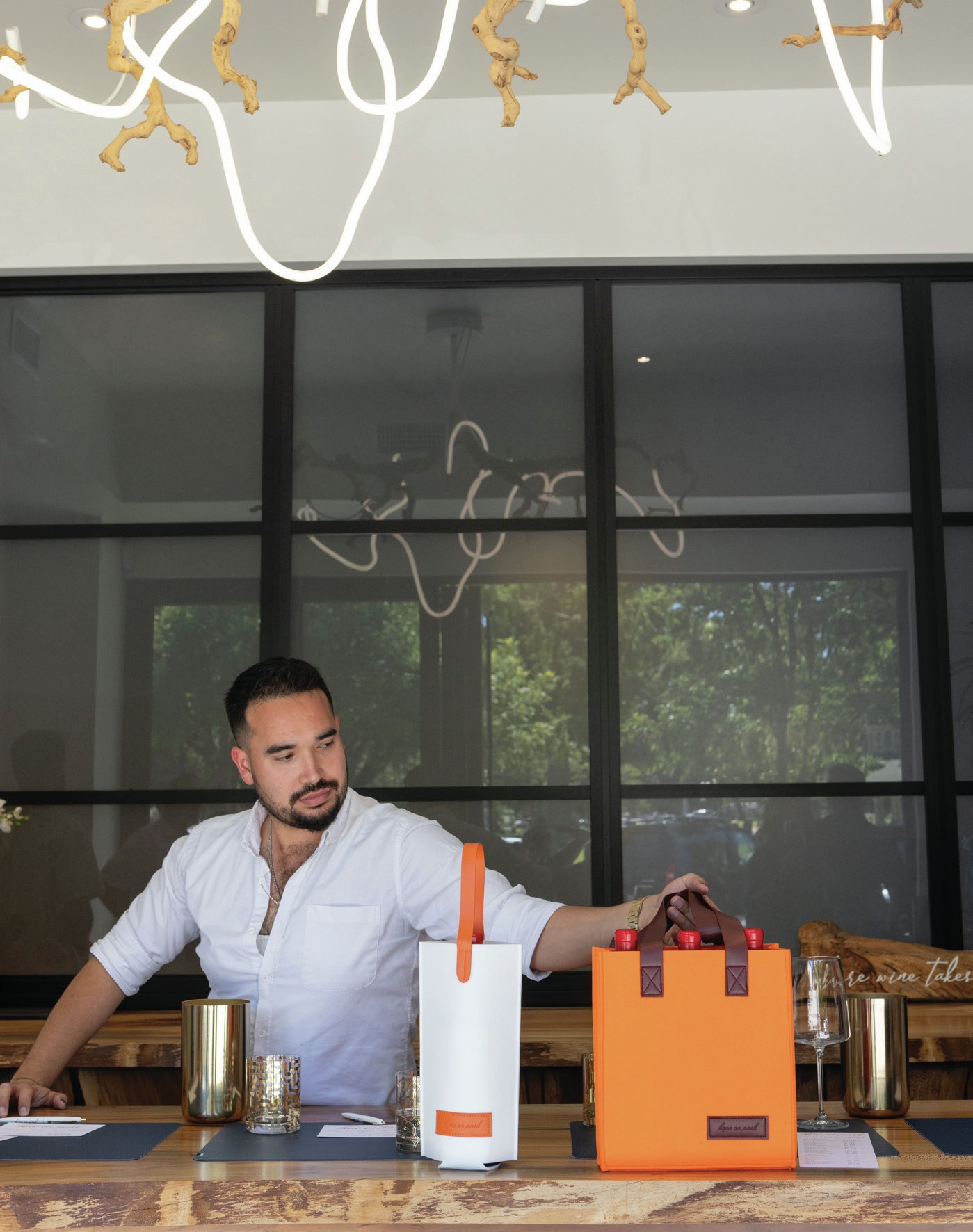
In 2023, Hope Family Wines expanded into downtown Paso Robles with a satellite tasting room, Hope on Park.
A reclaimed wood bar created by Deadwood Revival Design greets you right off Park Street, inviting walk-ins. At the bar, guests can order everything, from a $16 bottle of Liberty School Cabernet to a $150 Austin Hope Cabernet Reserve, plus seasonal wine cocktails. Paso’s open container laws mean you can take your glass across the street to the park, which is great in the summer when they have live music.
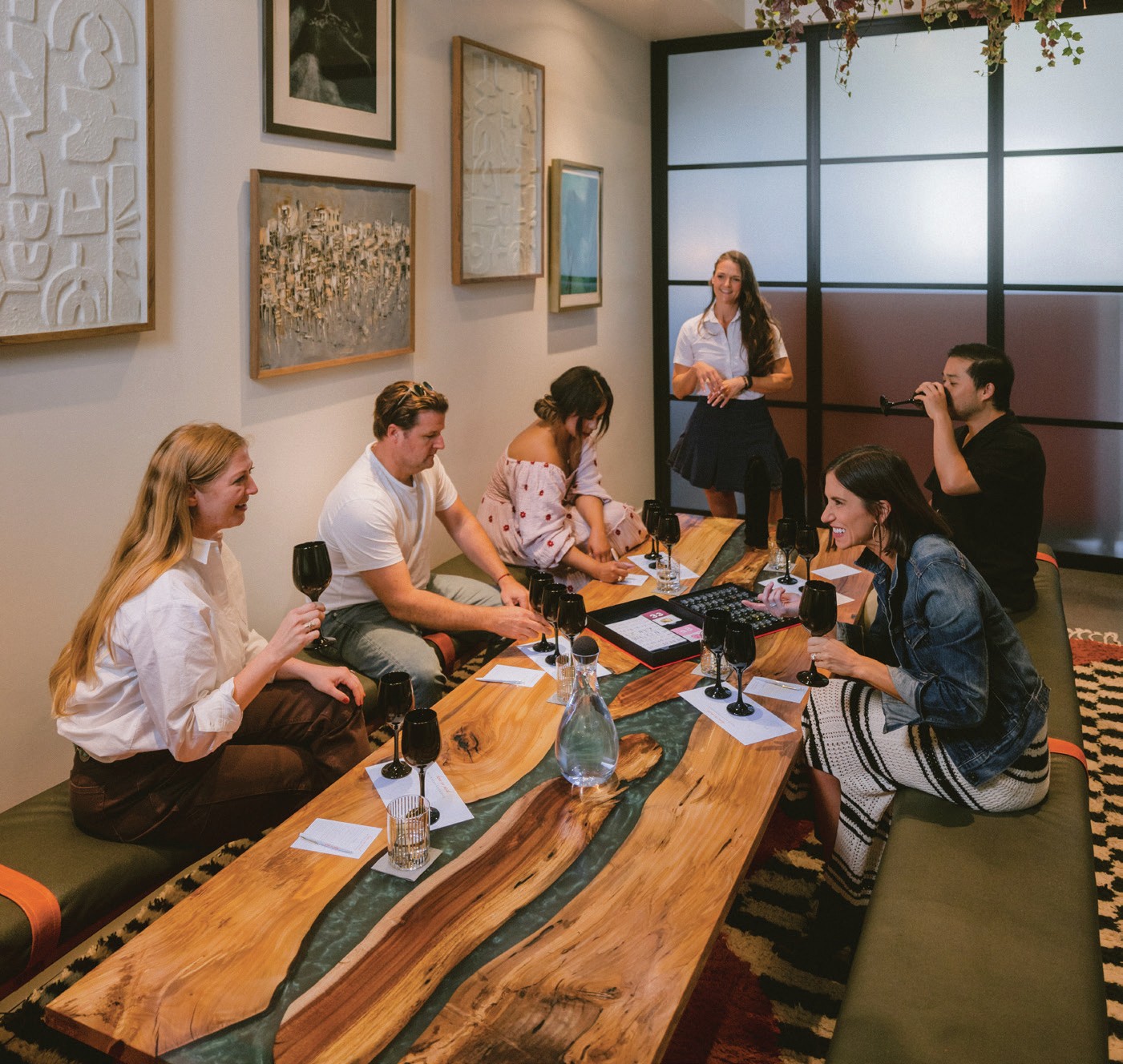
Inside, the tasting room splinters into themed spaces, each leaning into its own carefully orchestrated sense of kitsch. The Creative Space channels a late ’60s, camper-van psychedelic vibe. The Club Room next door swaps psychedelic color for darker woods and plush leather booths-an atmosphere that gestures at the old-school private club but undercuts it with playful touches. “Austin and Celeste worked closely on the space,” Armstrong said. “You’ll see personal touches-feathers, waterfowl, driftwood. There’s soul in every inch.”
In the tasting room guests can choose from rare library selections or take part in guided sensory sessions built around their own preferences. Offerings change with the season: during harvest, guests analyze Cabernet grapes with beakers and Brix readings; in winter, wine is paired with high tea. “It’s community-driven,” Armstrong observed. “If people want to geek out, they can. If they want something casual and fun, that’s here too.”
It’s tempting to say Hope on Park is built for the young-the neon, the trivia nights and details that practically beg to be Instagrammed-but that misses the point. While Hope Family Wines naturally appeals to younger visitors, Armstrong resists the idea that the tasting room experiences are tailored specifically to Millennials or Gen Z. “It’s about curiosity, storytelling and shared experiences. And that resonates whether you’re 21 or 80.”
Yet, Austin Hope continues to draw a younger crowd. This could be, in part, because Armstrong isn’t afraid to experiment with formats that make learning about wine more approachable. She credits some of that spirit to being a parent. “My son’s a gamer,” she explained. “I think about him a lot when we’re designing new experiences. That generation is used to exploring, unlocking, playing. So, we’ve kind of gamified it. Let’s do some trivia. Let’s do something in a black glass where you’re guessing. It’s fun-and it sparks connection.”
Lessons for the Industry
For others in the wine trade, Hope Family Wines offers a blueprint for thoughtful growth: invest in infrastructure that works for the long haul, experiment with hospitality formats that meet people where they are and build teams empowered to think differently.
“The environment is beautiful, and the service is technically on point,” Armstrong said. “But the personality of the service is approachable and casual.”